Sacred Art Gallery
Explore divine manifestations generated by our AI

Buddha Shakyamuni
View DetailsThis image represents the fully enlightened state of Shakyamuni Buddha, depicted in his 'Enjoyment Body' (Sambhogakaya).

Stupa (Chöten)
View DetailsThe stupa is a profound symbol of the enlightened mind of the Buddha, representing the entire path to enlightenment

Avalokiteshvara (Tchenrezig)
View DetailsAvalokiteshvara is the Bodhisattva of Compassion, representing the boundless and universal compassion of all Buddhas

Victory Banner
View DetailsThe Victory Banner is a powerful symbol of the Buddha's triumph over the four Maras (obstacles).

The Golden Fish
View DetailsThe Golden Fish symbolize freedom from suffering, liberation from the cycle of samsara, and abundance.

Green Tara (Jetsun Dolma)
View DetailsGreen Tara is revered as the embodiment of swift compassion and enlightened activity, offering immediate protection against physical and spiritual dangers. She represents the active, motherly care that guides all sentient beings toward ultimate liberation.

Jetsun Milarepa
View DetailsJetsun Milarepa represents the possibility of achieving complete enlightenment within a single lifetime through supreme dedication, meditation, and ascetic discipline. As one of Tibet's most celebrated yogis and spiritual poets, he symbolizes the transformative potential of the Buddha's teachings and the Kagyu lineage.

Medicine Buddha (Bhaisajyaguru)
View DetailsThe Medicine Buddha represents the ultimate embodiment of physical, mental, and spiritual healing. Devotees invoke his blessing to alleviate suffering, purify negative karma, and overcome the root causes of illness and ignorance.

Six-Armed Mahakala (Gonpo)
View DetailsMahakala is a wrathful protector deity, or dharmapala, who embodies the fierce compassion that overcomes spiritual obstacles and ignorance. His six arms represent the perfection of the six virtues that assist practitioners on the path to enlightenment.

Padmasambhava (Guru Rinpoche)
View DetailsPadmasambhava, venerated as the Second Buddha, is the legendary Indian master who established Vajrayana Buddhism in Tibet. He represents enlightened power and wisdom capable of overcoming all spiritual obstacles and transforming negative energies.

Namchu Wangden: Kalachakra Emblem
View DetailsNamchu Wangden is the sacred Kalachakra emblem. Its ten interwoven parts symbolize harmony of body, mind and cosmos, protection and awakening.
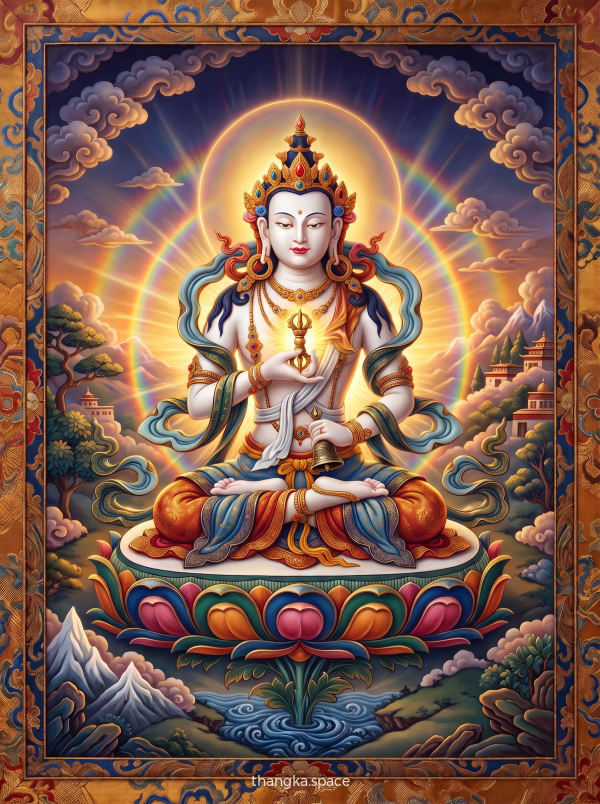
Vajrasattva (Dorje Sempa)
View DetailsVajrasattva embodies the primordial purity of the enlightened mind and represents the ultimate principle of purification in Tibetan Buddhism. Meditative practices focused on him are undertaken to cleanse negative karma, mental obscurations, and transgressions of vows.

Medicine Buddha (Bhaisajyaguru) Mandala
View DetailsThis mandala represents the consecrated realm of the Medicine Buddha, serving as a contemplative diagram for inner transformation and the healing of physical, mental, and spiritual afflictions. It symbolizes the restoration of balance and the eradication of ignorance, attachment, and aversion.

Gelug Lama
View DetailsIn Tibetan Buddhism, the lama or spiritual master embodies the living lineage of the Buddha's teachings, uniting monastic discipline, scholarly learning, and compassionate guidance to lead practitioners toward liberation.

Shakyamuni Buddha
View DetailsShakyamuni Buddha represents the historical founder of Buddhism and the embodiment of supreme enlightenment, wisdom, and compassion. His posture of teaching signifies the exposition of the Dharma to guide sentient beings toward liberation from suffering.
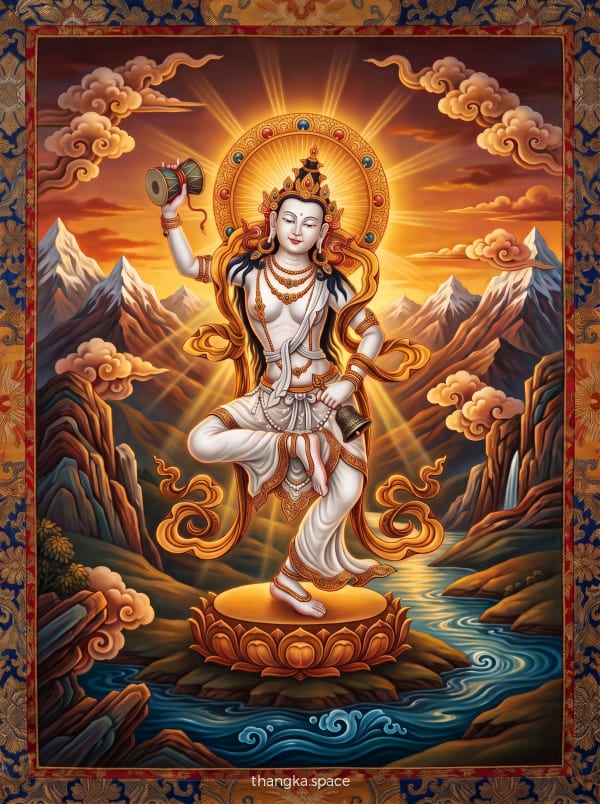
Machig Labdrön
View DetailsRevered as an enlightened eleventh-century Tibetan female master, Machig Labdrön is the founder of the Chöd lineage, a practice dedicated to severing ego-clinging and fear. She embodies transcendent wisdom, transforming self-grasping into boundless compassion and realization of emptiness.

Manjushri (Jampelyang)
View DetailsManjushri personifies transcendent wisdom (prajna), embodying the supreme discernment needed to dispel the darkness of ignorance and grasp the true nature of reality. His accompanying emblems, the flaming sword and the sacred text, signify the cutting through of delusion and the realization of Buddhist teachings.

Tibetan Buddhist Mandala
View DetailsThe mandala represents the sacred architecture of the enlightened cosmos, functioning as a visual support for meditation and the realization of wisdom. Its concentric courts and sacred palace guide the practitioner inward toward the ultimate truth of the Dharma.
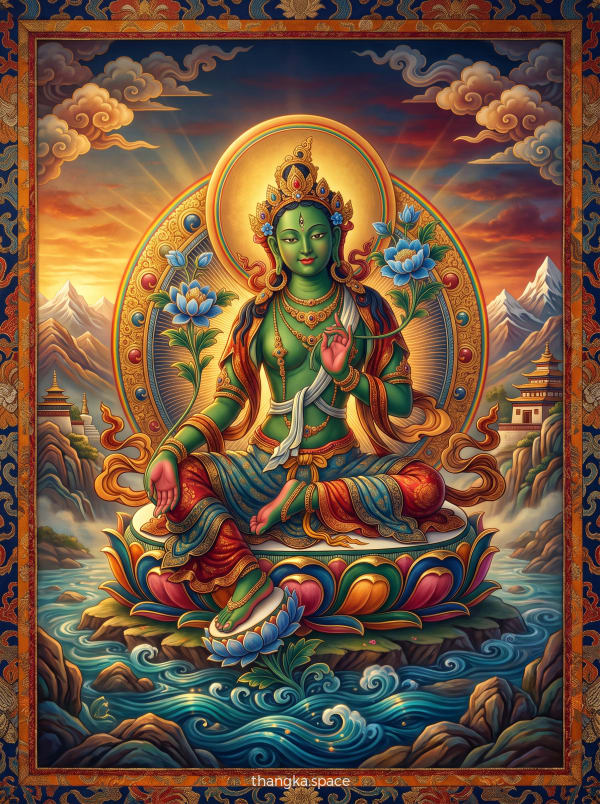
Green Tara (Syamatara)
View DetailsRevered as the mother of all buddhas, Green Tara embodies swift, active compassion and protection from worldly and spiritual fears. Her extended foot symbolizes readiness to step forward instantly to alleviate suffering and guide beings toward enlightenment.

Shakyamuni Buddha
View DetailsShakyamuni Buddha represents the historical founder of Buddhism, embodying the attainment of supreme enlightenment and inner peace. His earth-touching gesture signifies his steadfast triumph over delusion and temptation beneath the Bodhi tree.